Most people who tint their car windows do it for one reason — they want to look good. And that’s fair. But if you’ve ever sat in a parked car on a summer afternoon and felt the heat hit you like an oven, you already know that looks aren’t the whole story.
Window tinting has evolved a lot. And the gap between basic dyed film and Ceramic window tint isn’t just a price difference. It’s a completely different experience.

The Science Behind Why Ceramic Film Performs Better
Regular tint works by using dye or metalite layers to block light. It does the job — at first. But dye fades. Metal film can interfere with GPS, phone signals, and toll readers. Neither option handles heat rejection as well as most people expect.
What Ceramic Actually Does Differently
Ceramic film uses nano-ceramic particles embedded in the film layers. These particles don’t conduct heat, don’t fade in UV exposure, and don’t block radio frequencies. The result is a film that stays effective for years and doesn’t mess with your electronics.
The heat rejection numbers are genuinely impressive. Quality ceramic films can block up to 99% of UV rays and reject a significant portion of infrared heat — the kind you actually feel on your skin even through glass.
Signal Interference Is a Real Problem With Metal Films
If you’ve ever had your GPS act up or noticed your phone struggling to hold signal, metallic tint could be the culprit. Ceramic solves this entirely. You get the heat and UV protection without any of the electronic drawbacks.
What to Expect During and After Installation
The Installation Process
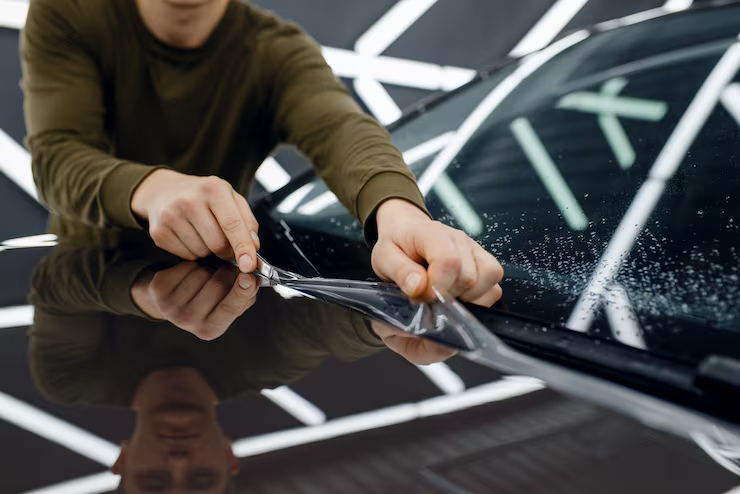
Professional installation typically takes two to four hours depending on the vehicle. The film is cut to precise measurements, applied wet, and then squeegeed to remove air bubbles. You’ll usually be asked to wait 48–72 hours before rolling down your windows to let the film fully cure.
Curing and Long-Term Care
Ceramic tint is more durable than dyed film, but it still needs some basic care. Avoid ammonia-based window cleaners — they degrade the film over time. A simple microfiber cloth with a gentle glass cleaner is all you need.
The good news is that once it’s cured and settled, ceramic film is remarkably low-maintenance. It won’t turn purple, won’t bubble up in heat, and won’t peel at the edges after a couple of years.
How Ceramic Tint Connects to Overall Car Care
One thing people overlook is how UV protection from window tinting connects to the health of your interior — and even your paint. Constant sun exposure fades dashboards, cracks leather, and bleaches upholstery. But exterior paintwork suffers too.
The Link Between Sun Exposure and Paint Damage
If you’re already thinking about protecting your car, pairing window tint with proper exterior care makes sense. Minor chips and scratches left untreated allow moisture to seep in, which leads to rust — especially on the hood and roof where sun hits hardest. That’s where a proper car paint touch up becomes important before damage spreads further.
The team at Shady Stint covers both sides of this equation — helping car owners make informed decisions about protection inside and out.
Choosing the Right Shade and VLT Level
VLT stands for Visible Light Transmission — it’s the percentage of light that passes through the film. A 5% VLT is very dark (limo tint), while 70% is nearly clear. Most states have legal limits on how dark your front windows can be, so check local laws before choosing.
Practical Shade Recommendations
For daily drivers in hot climates, 35–50% VLT on front windows and 20–35% on the rear gives a good balance of visibility and heat rejection. If you want privacy without sacrificing too much visibility, 20% on rear windows is a popular choice.
Don’t just go dark because it looks cool. Consider how much you drive at night, whether you have kids or passengers who need to see out, and what the legal limits are in your state.
Conclusion
Ceramic window tint isn’t a luxury add-on — it’s a practical investment that pays off in comfort, UV protection, and long-term interior preservation. If you spend real time in your car, the upgrade is worth it. And if you’re already thinking about protecting your car from the elements, don’t stop at the windows. A complete approach to car care, from the glass to the paint, keeps your vehicle looking and performing better for longer.