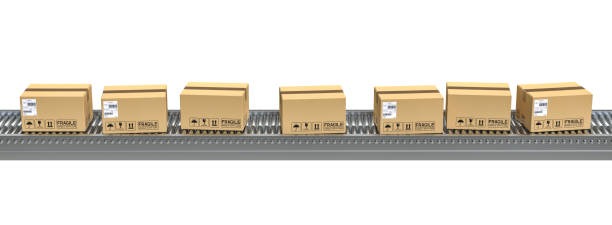
Shipping accuracy is essential for logistics companies that manage tight schedules, complex freight requirements, and demanding customer expectations. Even a minor discrepancy in package dimensions can influence transportation planning, space allocation, and shipment records. For this reason, businesses are increasingly exploring automated measurement technologies. Freight dimensioning systems can help organizations capture more consistent information while reducing reliance on manual measurement.
The technology is particularly useful for businesses processing diverse freight. Packages can vary considerably in size, shape, and handling requirements, making standardized measurement difficult when performed manually. Automated systems offer a way to capture dimensional information as part of the normal shipping workflow.
The Connection Between Dimensions and Shipping
Dimensions are an important part of understanding a shipment. Length, width, and height determine the physical volume occupied by freight. In combination with weight and other shipment information, these measurements can support transportation planning and freight documentation.
If dimensions are inaccurate, the resulting information may not accurately represent the shipment. This can affect how freight is planned and processed.
Automating the Measurement Process
One of the primary advantages of freight dimensioning systems is their ability to automate a repetitive operational task. Instead of having an employee measure each item individually, sensors or imaging technologies can capture measurements within seconds, depending on the equipment and workflow.
Automation also creates greater consistency. Employees may measure the same irregular package slightly differently, while automated equipment follows a defined measurement process.
Creating Consistent Freight Data
Consistency is important when dimensional information moves between departments. A warehouse may use measurements for storage, while transportation teams may use them for load planning and shipping documentation.
A standardized measurement process can make the information more reliable across these workflows. Businesses can also establish procedures for handling unusual freight that falls outside normal measurement parameters.
Supporting Better Load Planning
Transportation capacity is limited. Trucks, trailers, containers, and aircraft have physical space constraints that must be considered when arranging shipments.
Accurate dimensions can help planners understand how individual packages may fit within available capacity. This can support better load organization and potentially reduce unused space.
Freight dimensioning systems can provide dimensional data before loading decisions are finalized. When connected with transportation software, the information can become part of a larger planning process rather than remaining in a separate measurement record.
Handling Irregular and Oversized Freight
Standard boxes are relatively easy to measure, but irregular freight can present a greater challenge. Items with unusual shapes, protrusions, or varying surfaces may require additional attention.
Automated dimensioning technologies can be selected based on the types of freight a company handles. Some systems are designed for specific operating environments, while others can accommodate broader ranges of package sizes.
The key is choosing technology that matches actual freight characteristics instead of assuming that every facility has the same measurement requirements.

Improving Documentation and Traceability
Reliable records are important for logistics operations. When shipment measurements are captured electronically, businesses can associate dimensional information with package identification or shipment records.
This creates a traceable information flow. If a discrepancy occurs later, teams may have access to the original measurement data rather than relying entirely on handwritten notes or employee recollection.
Freight dimensioning systems can therefore contribute to better operational documentation as well as faster measurement.
Integrating Technology Into Existing Workflows
Successful implementation requires more than installing measurement equipment. Businesses should consider where dimensioning will occur, which employees will use the system, and how measurement data will move into existing software.
Integration with warehouse management, transportation management, or enterprise systems can increase the usefulness of the technology. It can also reduce duplicate data entry.
Before implementation, companies should evaluate throughput requirements, freight characteristics, available space, connectivity, and maintenance needs.
Conclusion
Shipping accuracy depends on reliable information, and dimensions are an important component of that information. Manual measurement may create challenges as freight volumes grow or shipments become more complex. Freight dimensioning systems can automate measurement and provide consistent data for shipping, transportation, and warehouse processes.
Their greatest value comes when dimensional information becomes part of a connected logistics workflow. With appropriate implementation, businesses can improve data consistency, support load planning, strengthen documentation, and create a foundation for broader warehouse automation.