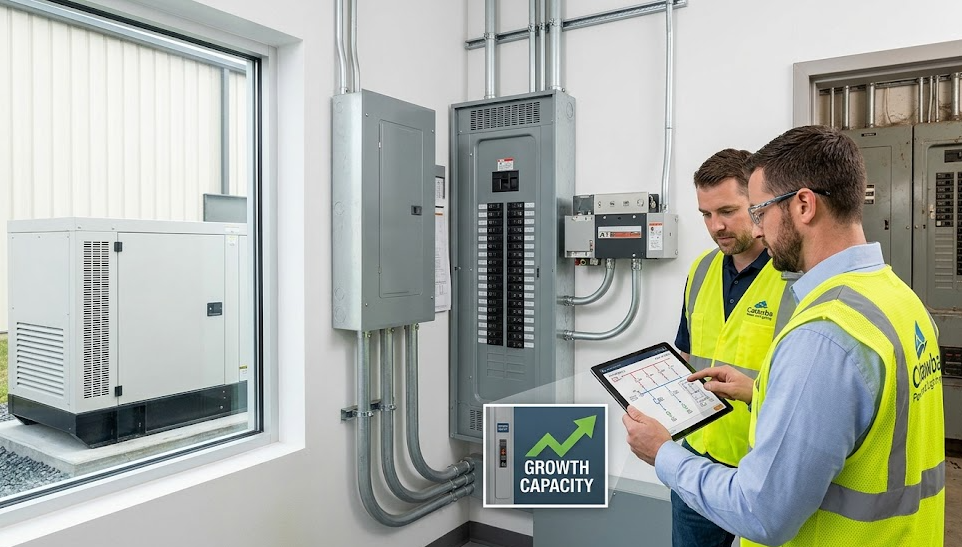
Electrical distribution doesn’t get the attention it deserves. Most facility managers focus on the visible parts of their building’s electrical system, the lighting, the outlets, the equipment. The distribution infrastructure that makes all of it work sits behind panels and inside conduit, largely invisible and largely taken for granted. That works fine until it doesn’t. And when aging or improperly configured distribution infrastructure causes problems, those problems tend to be expensive, disruptive, and difficult to diagnose without the right expertise.
Understanding what good electrical distribution looks like, and what warning signs indicate that the current setup is approaching the end of its reliable service life, is valuable knowledge for anyone responsible for managing a commercial, tribal, or industrial facility. It’s also the foundation for understanding why Backup power solutions only perform as well as the distribution infrastructure supporting them.
Catawba Power and Lighting specializes in electrical infrastructure alongside backup power systems and commercial lighting solutions. They serve tribal nations, commercial developers, and industrial facilities with competitive procurement, dependable products, and responsive support. Their focus is on long-term infrastructure performance, not just short-term project transactions.
What Does an Electrical Distribution System Actually Consist Of?
For facility managers who haven’t worked closely with electrical engineers, the terminology can be confusing. An electrical distribution system starts at the utility service entrance, where power comes into the building from the utility grid. From there, it flows through the main service disconnect and distribution panel, which routes power to sub-panels throughout the building. From those sub-panels, branch circuits distribute power to individual loads including lighting, equipment, HVAC systems, and outlets.
Protecting all of these circuits are circuit breakers and fuses that interrupt current flow when a fault or overload occurs. In larger commercial facilities, motor control centers manage power to large motor-driven equipment like HVAC fans, pumps, and elevators. Transfer switches connect backup generators or other alternative power sources when the utility supply fails.
The quality, age, and configuration of all of these components determine how reliably and safely the facility’s electrical system operates. Catawba Power and Lighting sources and supports commercial-grade switchgear and electrical distribution equipment for all of these functions, helping facility managers ensure their infrastructure is up to the demands placed on it.
What Are the Most Common Signs That Distribution Infrastructure Needs Attention?
Facilities don’t usually get clear warning before distribution equipment fails. But there are signals that indicate aging or stressed infrastructure if you know what to look for. Breakers that trip frequently under normal load conditions suggest that circuits are undersized for current demand or that breaker components are degrading and no longer operating at their rated settings. Unexplained voltage fluctuations at equipment can indicate connection deterioration or capacity issues in the distribution pathway. Warm or discolored panels are a red flag for overheating connections that need immediate attention.
For tribal government facilities and commercial buildings constructed 20 to 30 years ago, these signs are worth taking seriously. Distribution equipment has a finite service life, and facilities that were built to the electrical loads of the 1990s are often running significantly higher loads today as technology, HVAC requirements, and occupant density have all increased.
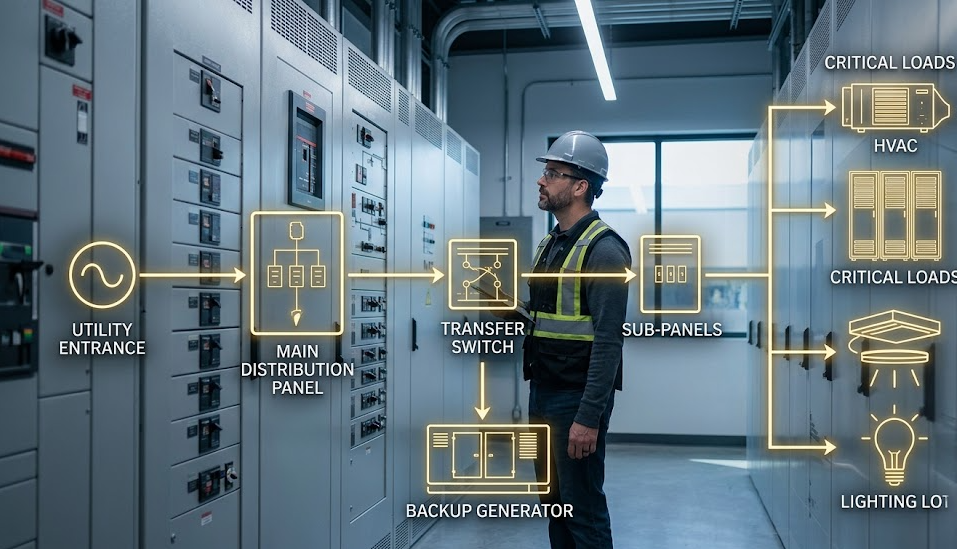
Backup power solutions installed in a facility with deteriorating distribution infrastructure inherit that infrastructure’s weaknesses. A generator can be correctly specified and perfectly installed, but if the transfer switch, panels, and conductors between it and the critical loads aren’t in good condition, backup power performance will be unreliable. Addressing distribution health before or alongside a backup power project is the right approach.
How New Construction Projects Should Approach Distribution Planning
For commercial developers and tribal governments building new facilities, distribution planning is an opportunity to get things right from the beginning rather than correcting problems later. The fundamental principle is to design for future load growth, not just current requirements. A facility that’s sized exactly for today’s electrical loads will be undersized within a decade as technology, occupancy, and operational patterns evolve.
Practical approaches include designing the main service entrance and distribution panels with expansion capacity, using sub-panel configurations that allow new branch circuits to be added without major rework, specifying transfer switch capacity that accommodates backup generator sizing for anticipated future loads, and documenting the distribution system thoroughly so future facility managers understand what was installed and why.
Catawba Power and Lighting supports new construction distribution projects alongside existing facility upgrades, bringing their infrastructure-level expertise and strategic manufacturer relationships to bear from the specification stage forward. Their direct-ship distribution capabilities help keep construction timelines on track by ensuring equipment arrives when the project needs it.
Why Tribal Facilities Often Face Unique Distribution Challenges
Tribal government facilities frequently face a combination of challenges that commercial facilities in urban areas don’t encounter in the same way. Many tribal communities are in rural or remote locations where utility infrastructure is older and less robust than in urban areas. Service restoration after grid failures takes longer when utility crews have to travel significant distances. Electrical demand on tribal campuses has grown substantially as communities have expanded facilities, added economic development operations, and increased technology infrastructure.
For tribal nations managing these realities, distribution planning has to account for both the limitations of the existing infrastructure and the long-term growth trajectory of the community’s facility needs. Electrical distribution solutions sourced and supported by Catawba Power and Lighting address exactly this context. As a Native American-owned distribution partner, Catawba Power and Lighting understands tribal facility planning from the inside. Their mission includes strengthening Native economies and supporting long-term infrastructure growth, which means they approach tribal distribution projects as community investments, not just commercial transactions.
Practical Scenario: Commercial Development Distribution Upgrade
A commercial developer managing a mixed-use property with retail, office, and restaurant tenants realizes that the building’s original distribution infrastructure, sized for 1990s load requirements, is no longer adequate. Several tenant spaces are drawing near the circuit capacity limits, HVAC equipment has been upgraded and draws more power than the original systems, and a planned EV charging station installation will add significant new load.
Working with Catawba Power and Lighting, the developer specifies a distribution upgrade that replaces the aging main panel with higher-capacity equipment, adds sub-panel capacity in the areas where load growth is concentrated, and installs a transfer switch sized for a standby generator that will serve the entire property. The result is a facility that meets current load requirements with room for future growth, improved power quality throughout the building, and backup power capability that protects all tenants during grid failures.
Conclusion
Electrical distribution planning is one of the most important and most underappreciated aspects of commercial and tribal facility management. Getting it right protects the facility’s operational continuity, supports reliable backup power performance, and provides the infrastructure foundation for future growth. Catawba Power and Lighting brings the expertise, manufacturer relationships, and project support needed to make distribution planning and backup power projects succeed. Their community-centered values and long-term partnership approach mean clients aren’t just buying equipment. They’re building a reliable infrastructure foundation with a partner who’s invested in their success.
FAQ
Q: What are warning signs that a facility’s electrical distribution system needs upgrading? A: Frequently tripping breakers, unexplained voltage fluctuations at equipment, warm or discolored panels, and circuits operating near capacity are all indicators that aging distribution infrastructure may need assessment and upgrading.
Q: Why should backup power and electrical distribution upgrades be coordinated? A: Backup power solutions are only as reliable as the distribution infrastructure connecting the generator to critical loads. Addressing both together ensures that the complete power delivery pathway performs reliably during outages.
Q: Is Catawba Power and Lighting experienced with tribal facility distribution projects? A: Yes. As a Native American-owned distributor with a mission to strengthen Native economies and support long-term infrastructure growth, they bring specific experience and cultural alignment to tribal government and tribal enterprise distribution projects.