Quick Answer: Metal laser parts are components cut from sheet or plate using a focused laser beam, typically fiber laser technology today, that melts or vaporizes material along a precise path. Manufacturers favor the process for its accuracy, clean edge quality, minimal material waste, and ability to cut complex profiles without the tooling costs associated with stamping or punching.
Walk through almost any sheet metal shop built in the last decade and you will find a laser cutting cell doing work that used to require three separate machines and a die shop. That shift did not happen by accident. Laser cutting solved a specific set of problems that older methods struggled with.
How Laser Cutting Produces Metal Parts
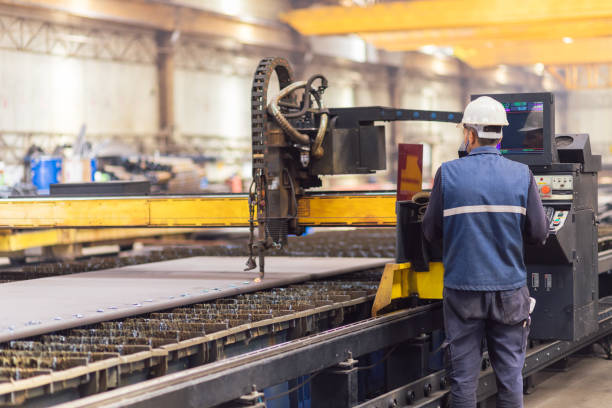
A fiber laser cutting machine directs a concentrated beam of light through a focusing lens onto the surface of the metal. The beam heats the material past its melting point along the programmed path, and an assist gas, usually oxygen, nitrogen, or compressed air, blows the molten material out of the kerf. Oxygen assist speeds up cutting on carbon steel through an exothermic reaction, while nitrogen produces a cleaner, oxide free edge on stainless steel and aluminum, which matters for parts that will be welded or left unpainted.
Fiber lasers have largely replaced older CO2 laser systems over the past several years. Fiber technology cuts reflective metals like aluminum, brass, and copper far more reliably, runs at lower operating cost, and requires less maintenance since there are no mirrors to align.
Why Metal Laser Parts Outperform Older Methods
Traditional stamping needs a hard tool built for one specific part, which makes sense at massive volume but is a poor fit for anything under tens of thousands of units. Laser cutting works straight from a CAD file, so the first part and the ten thousandth part cost roughly the same in tooling terms, which is zero. That single fact reshaped how shops quote prototype and mid volume sheet metal work.
Edge quality is another factor. A well tuned laser cut produces a smooth, nearly vertical edge with minimal heat affected zone, especially on thinner gauge material. Compare that to plasma cutting, which is faster on thick plate but leaves a rougher edge and a wider heat affected zone, and the choice for precision parts becomes clear.
Shops producing metal laser parts, including Swiss Isle Precision, typically pair laser cutting with downstream bending, welding, and finishing to deliver complete sheet metal assemblies rather than flat blanks. That combination is what most customers actually need, since a laser cut bracket rarely ships as a flat piece.
Tolerances And Material Range
Modern fiber laser systems hold cutting tolerances around plus or minus 0.005 inches on typical gauge steel, tighter on thinner material and slightly looser as thickness increases. Material range spans from thin foil up to plate over an inch thick on higher powered industrial machines, though cut speed and edge quality both drop as thickness climbs. Mild steel, stainless steel, aluminum, brass, and titanium are all regularly cut this way, with each material calling for its own power, speed, and assist gas settings.
When Laser Cutting Is Not The Right Choice
Laser cutting is not universally the best answer. Extremely thick plate, above roughly one and a half inches, often machines or plasma cuts more economically. Highly reflective, thin foil grade copper can also be tricky depending on laser type and power. And for truly massive production runs in the millions of units, stamping still wins on cost per part once the tooling investment is amortized.
A Point Worth Making Plainly
A lot of buyers assume laser cutting and waterjet cutting are interchangeable. They are not. Waterjet uses no heat, which makes it the better choice for heat sensitive materials or parts where zero heat affected zone is a hard requirement. Laser cutting is faster and generally more cost effective for standard structural and enclosure grade metals where a small heat affected zone is acceptable.
Frequently Asked Questions
Q: What is the difference between fiber laser and CO2 laser cutting?
A: Fiber lasers cut reflective metals more reliably, cost less to run, and need less maintenance since they use no mirrors. CO2 lasers have largely been phased out for metal cutting in favor of fiber technology.
Q: How accurate are metal laser parts?
A: Well maintained fiber laser systems typically hold tolerances around plus or minus 0.005 inches on standard gauge steel, with tighter results on thinner material.
Q: What thickness range can laser cutting handle?
A: From thin foil up to plate over an inch thick on high powered industrial machines, though speed and edge quality decline as thickness increases.
Q: Is laser cutting cheaper than stamping?
A: For low to mid volume runs, yes, since laser cutting needs no hard tooling. Stamping becomes more cost effective only at very high volumes where tooling cost is spread across many parts.
Q: When should I choose waterjet over laser cutting for metal parts?
A: Choose waterjet when the material is heat sensitive or the application cannot tolerate any heat affected zone. Laser cutting is faster and more economical for most standard structural metals.