In the world of early childhood education, imaginative play is not an optional extra. It is a core component of how young children develop language, empathy, social skills, and creative thinking. Yet the physical resources that support that play are often underestimated. Among the most valuable, and most overlooked, is the dressing up rail.
What Is a Dressing Up Rail and Why Does It Matter?
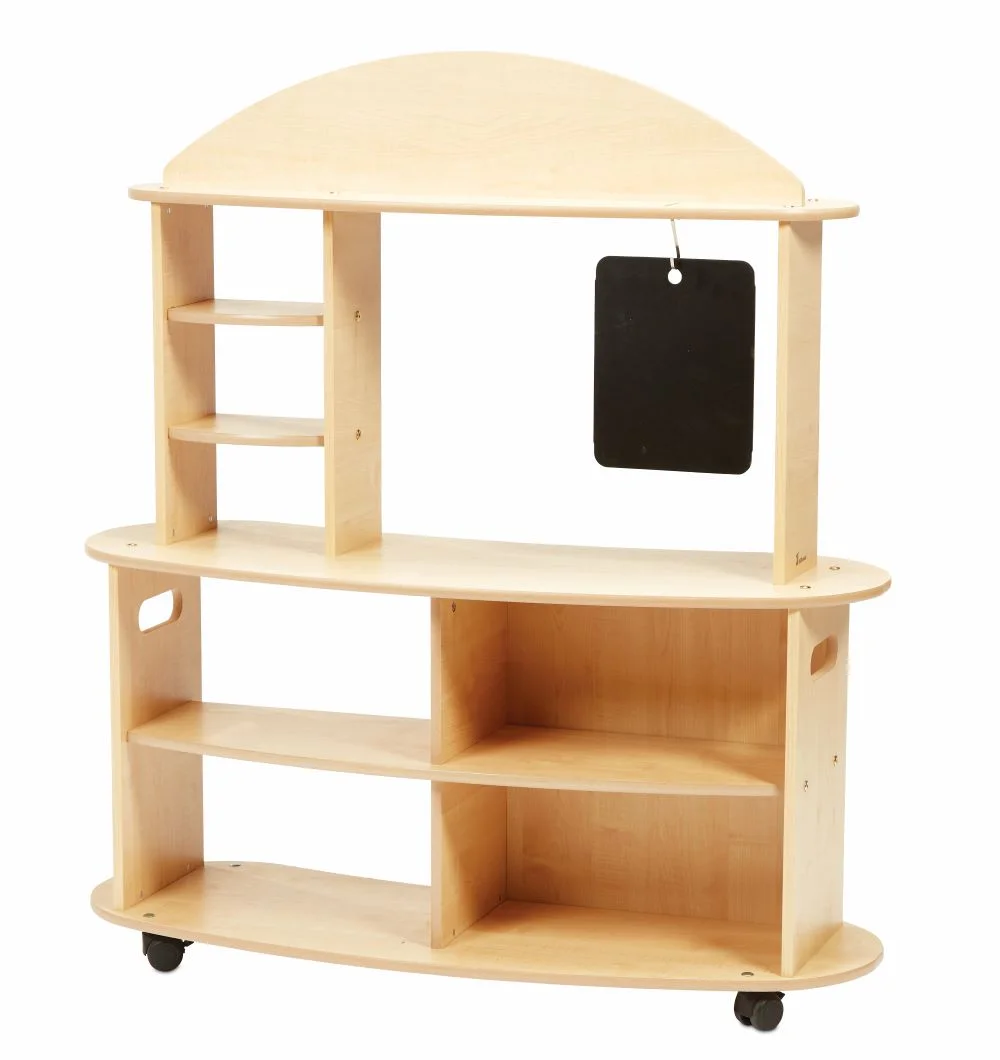
A dressing up rail is a purpose-built furniture piece designed to hold costumes, dress-up clothing, and accessories in an accessible, organised, and visually appealing way. Unlike a jumbled box of costumes, a proper rail invites children to engage with the materials available, choose independently, and return items without adult intervention.
In a well-resourced early years classroom, the dressing up rail sits at the heart of the role-play area. It might hold a firefighter’s jacket next to a chef’s apron, a superhero cape beside a princess gown, or a doctor’s coat alongside a builder’s helmet. These items serve as props for the rich imaginative worlds that children construct and inhabit during free play.
How Does Dressing Up Support Child Development?
The developmental benefits of costume play are well-documented across early childhood research. When children dress up, they are doing far more than playing pretend. They are practising sophisticated cognitive and emotional skills.
Language development accelerates during role play. Children narrate scenarios, take on character voices, negotiate roles with peers, and build vocabulary as they encounter new words connected to the roles they are playing. A child wearing a veterinary coat and treating stuffed animals will naturally absorb and use words like stethoscope, diagnosis, and treatment in context.
Social and emotional development also advances through imaginative play. Taking turns, resolving disagreements, understanding another person’s perspective, and managing frustration are all practised in the low-stakes environment of a dressing up scenario. Children can safely explore emotions and situations that might otherwise feel overwhelming, building resilience and emotional intelligence in the process.
Fine motor skills improve as children practise fastening buttons, zips, buckles, and ties on costumes. These small physical tasks strengthen the hand muscles and coordination that children will later need for writing and other precise tasks.
What Features Should a Good Dressing Up Rail Have?
Not all dressing up rails are created equal, and the quality of the rail affects how well it serves both children and teachers.
Height is the most important consideration. A dressing up rail in an early years setting must be low enough for children to reach independently. When children can select and replace their own costumes without adult assistance, they practise autonomy and self-management, qualities that support their development beyond the role-play area.
Stability is equally critical. A rail that tips when a child pulls on a heavy costume creates a safety hazard and discourages confident use. Sturdy bases, quality frames, and appropriate weight distribution all contribute to a rail that stands firm under the enthusiastic use of young children.
Storage capacity matters too. A rail with hooks for hanging items alongside shelves or baskets for hats, shoes, and accessories keeps the role-play area organised and inviting. When materials are clearly displayed and easy to access, children are more likely to engage with them creatively.
Durability is non-negotiable in a school environment. A dressing up rail will be used daily by dozens of children across many years. It must be built from materials that withstand constant handling, remain visually appealing over time, and clean easily when needed.
How Does a Dressing Up Rail Fit Into the Wider Classroom Environment?
The most effective early years classrooms are designed as a series of distinct zones, each supporting a different kind of learning. The role-play area, anchored by a well-stocked dressing up rail, is one of the most important of these zones.
When this area is clearly defined, attractively resourced, and positioned away from noisier activity areas, it allows children to immerse themselves in imaginative play without distraction. Teachers can observe from a respectful distance, noting the language children use, the social dynamics that emerge, and the concepts children are exploring through play, all of which provide valuable assessment information.
The dressing up rail also connects naturally to themed learning topics. If a class is exploring community helpers, the rail might feature uniforms for police officers, nurses, and postal workers. During a topic on fairy tales, it might hold crowns, cloaks, and wands. This integration between the role-play area and the curriculum enriches children’s understanding and gives imaginative play a purposeful connection to broader learning goals.
Are Dressing Up Rails Suitable for All Early Years Settings?
Yes. Whether in a nursery, reception class, childminding setting, or early years unit within a primary school, a dressing up rail is a worthwhile addition. The specific costumes and accessories will vary depending on the age of the children, the cultural context of the setting, and the current learning themes, but the furniture piece itself is universally applicable.
It is worth noting that dressing up rails can also be used outside during outdoor play sessions, particularly if they are made from weather-resistant materials. Bringing imaginative play outdoors extends children’s engagement with the natural environment and adds an additional dimension to role play.
What Should Schools Look for When Purchasing a Dressing Up Rail?
When selecting a dressing up rail, schools should consider the number of children who will use it simultaneously, the available floor space in the role-play area, and the range of costumes and accessories to be stored. Suppliers who specialise in early years furniture will be able to advise on models suited to specific settings and usage patterns.
It is also worth considering whether a rail can be adjusted in height over time. As children grow and the age range of the setting changes, a rail that can be repositioned offers greater long-term value.
Conclusion
A dressing up rail is far more than a storage solution. It is a catalyst for imagination, language, social development, and creative thinking. Schools that invest in quality role-play resources, including a well-designed dressing up rail, invest in the whole-child development that early years education is uniquely positioned to support.